How to Teach Reading to a 2-Year-Old: A Parent’s Guide
What you’ll learn:
- What reading readiness looks like at age 2 — and what’s realistic to expect
- Simple, play-based activities that build early literacy skills at home
- How to introduce letter sounds and phonics to a toddler without pressure
Parents often wonder whether it’s too early — or even possible — to teach reading to a 2-year-old. The answer might surprise you. While formal reading instruction isn’t the right approach at this age, how to teach reading to a 2-year-old is less about sitting down with worksheets and more about weaving language, books, and letter awareness into everyday life. Done well, the early literacy foundation you build now can give your child a significant head start when formal reading begins.
Can a 2-Year-Old Really Learn to Read?
The short answer is yes — some 2-year-olds can begin learning individual letter sounds and even start decoding simple three-letter words. But it’s important to understand what this actually means and what it doesn’t.
Learning to read at age 2 doesn’t mean drilling flashcards or working through a phonics programme for an hour each day. It means building the pre-reading skills that make formal reading instruction — when it comes later — fast, smooth, and successful. These skills include phonemic awareness (hearing individual sounds in words), print concepts (understanding that print carries meaning), vocabulary, and oral language development.
Some children at age 2 are genuinely ready to begin learning letter sounds — and if your child is interested, enthusiastic, and asking about letters, that’s a great sign to start. Other 2-year-olds aren’t there yet, and that’s equally normal. Every child develops at their own pace, and the most important thing at this stage is to follow your child’s lead rather than push ahead of their readiness.
What Reading Readiness Looks Like at Age 2
Before starting any kind of reading instruction, it’s worth checking in on where your child is developmentally. Reading readiness at age 2 doesn’t mean being ready to read — it means showing the early signs that the foundation is being laid.
Here are the key indicators to look for:
Interest in Books and Print
Does your child enjoy being read to? Do they bring you books, turn pages (even if not perfectly), and point at pictures? A child who loves books at age 2 is already building print awareness — one of the most important early literacy skills. If your child isn’t interested in books yet, that’s the first place to focus: make books warm, positive, and a normal part of your daily routine.
Beginning to Recognize Letters
Many 2-year-olds start noticing letters in their environment — on signs, food packaging, and TV. Some can name a handful of letters, especially the ones in their own name. This kind of environmental print awareness is a natural, healthy sign of early literacy development.
Enjoying Rhymes and Word Play
Does your child laugh at rhyming words, finish familiar rhymes when you pause, or enjoy songs and nursery rhymes? Phonemic awareness — the ability to hear individual sounds in words — begins with this kind of playful engagement with language. A 2-year-old who loves rhymes is already building the auditory skills that phonics instruction will build on.
Asking Questions About Words and Letters
“What does that say?” or “What letter is that?” are wonderful signs. Curiosity about print is one of the clearest indicators that a child is ready to start learning more deliberately. If your 2-year-old is asking these questions, lean into it.
How to Teach Reading to a 2-Year-Old: Core Strategies
The most effective approach to early literacy at age 2 is playful, consistent, and low-pressure. Here are the strategies that make the biggest difference.
1. Daily Read-Alouds
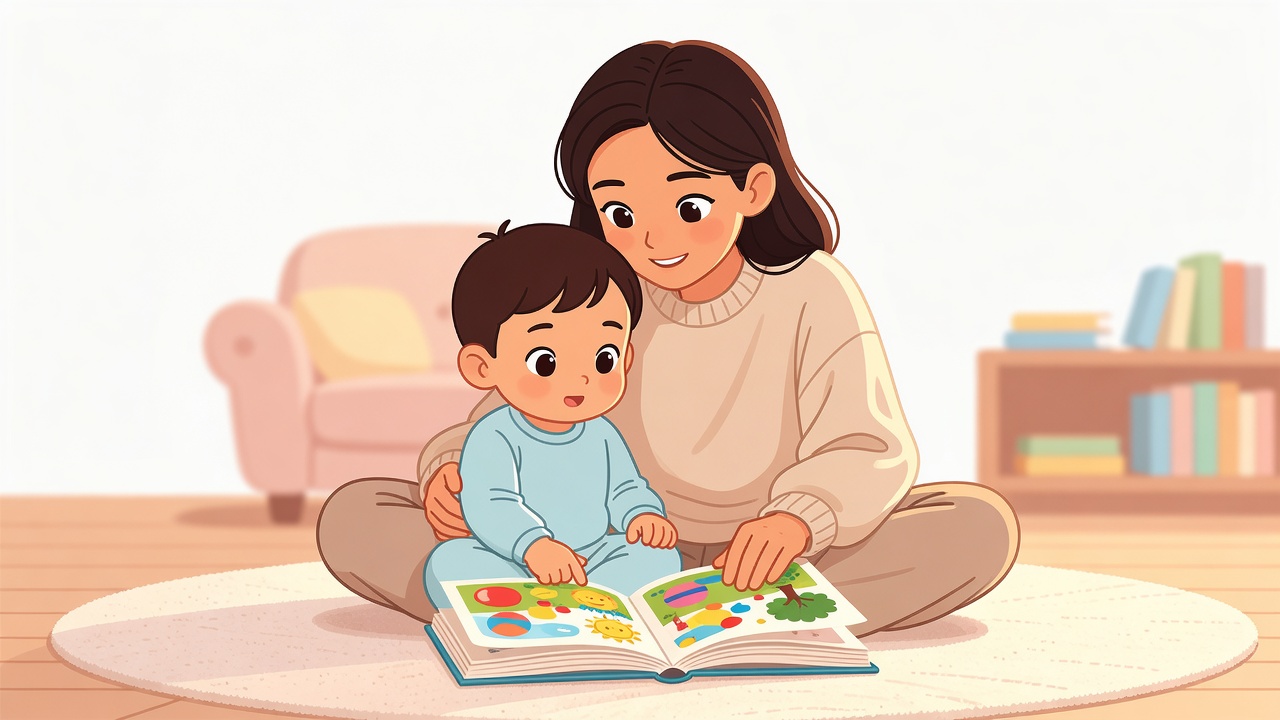
If you do nothing else from this guide, do this. Reading aloud to your 2-year-old every single day — even for just 10 minutes — is the single most impactful thing you can do for their reading development. It builds vocabulary, exposes them to book language and story structure, develops listening comprehension, and makes books a positive, enjoyable part of their world.
Don’t worry about getting through a whole book perfectly. Let your child point at pictures, ask questions, and wander back to favourite pages. The interaction is what matters, not the pace.
2. Introduce Letter Sounds — Not Just Letter Names
Most parents teach letter names first — A, B, C. But for reading, letter sounds are what matter. The letter b isn’t very useful to a reader who only knows it’s called “bee” — but a child who knows it says /b/ can start decoding.
Start with a handful of high-frequency consonant sounds: m, s, t, p, b. Say the sound, not the letter name: “/m/ for mum, /s/ for sun.” Keep it playful — sound games, picture cards, or pointing out letters in the environment. You don’t need to cover all 26 at once; a few solid, automatic sounds are worth far more than a shaky knowledge of the whole alphabet.
3. Play Rhyming Games
Rhyming is one of the earliest and most important phonemic awareness skills. Nursery rhymes, rhyming picture books, and simple rhyming games all count. Try pausing before the rhyming word in a familiar rhyme and letting your child fill it in. “Humpty Dumpty sat on a ___.” “Jack and Jill went up the ___.” This kind of oral word play builds the phonemic foundation that phonics instruction sits on top of.
4. Label Objects Around the Home
Write simple word labels and stick them on objects around your home — door, table, cup, bed. Point to them as you go about your day: “Look — this says ‘door.’ D... d... door.” This builds print awareness naturally, shows children that written words carry meaning, and reinforces letter-sound connections in a real-world context. Many parents are surprised how quickly toddlers start “reading” these labels back to them.
5. Keep Sessions Short and Follow Your Child’s Lead
The optimal session length for a 2-year-old is five to ten minutes — and that’s on a good day. Toddlers have short attention spans and will tell you very clearly when they’re done. The moment a session stops being fun, stop. A child who associates reading with frustration or pressure will resist it. A child who associates it with warmth, fun, and connection will seek it out.
Follow your child’s interest. If they’re fascinated by the letter S today, lean into it. If they want to read the same book for the fifteenth time, read it — repetition is how young children consolidate learning.
What About Phonics for 2-Year-Olds?
Formal phonics instruction — working through letter sounds systematically and moving toward decoding — can absolutely begin at age 2 for children who are ready and interested. The key word is “ready.”
A good starting point is the vowel sounds and a small set of consonants. Once a child knows three or four consonant sounds and a short vowel sound — say, /m/, /s/, /t/, /a/ — they can begin to decode simple three-letter words like mat, sat, and tam. This is genuinely exciting for children who are ready for it, and it can happen well before kindergarten.
The critical principle is that phonics at age 2 should feel like a game, not a lesson. Short sessions, lots of praise, and immediate stopping if your child loses interest are non-negotiable. Pushed too hard too early, even a willing child can develop a resistance to reading that takes time to undo.
A Simple Daily Routine for Teaching Your 2-Year-Old
You don’t need a structured programme to make real progress. Here’s a simple daily routine that takes less than 20 minutes and covers all the key early literacy bases:
Morning (5 minutes)
Pick one letter sound. Say it together, find things around the house that start with that sound, and say the sound a few times. Keep it light and playful — more of a game than a lesson.
Anytime During the Day (2–3 minutes)
Point out letters in the environment — on a cereal box, a sign, or a T-shirt. Say the letter name and its sound. “Look — that’s an M. M says /m/. Mum starts with /m/!” These micro-moments add up significantly over time.
Before Bed (10 minutes)
Read together. Let your child choose the book. Read slowly, point at words as you go, and enjoy the interaction. End on a high note — this is one of the most powerful positive associations with reading you can build.
That’s it. Consistent, low-key, and joyful beats intensive and pressured every single time when it comes to early literacy at age 2.
Frequently Asked Questions
Can a 2-year-old learn to read?
Yes — some 2-year-olds can begin learning letter sounds and even start decoding simple words, especially with consistent, playful instruction. However, the focus at age 2 should be on building pre-reading skills like phonemic awareness, print concepts, and vocabulary rather than formal reading instruction.
What reading skills should a 2-year-old have?
At age 2, typical reading readiness skills include enjoying being read to, turning pages, pointing at pictures, beginning to recognize that print carries meaning, and starting to show interest in letters and sounds. Some 2-year-olds also begin learning letter names and individual letter sounds.
How do I start teaching my 2-year-old to read?
Start with daily read-alouds, letter sound play, rhyming games, and labelling objects around the home. Keep sessions short — 5 to 10 minutes — and always follow your child’s interest and energy. Playful, low-pressure exposure to language and print at age 2 builds a strong foundation for formal reading later.
Keep Exploring
- Early Start — full literacy hub
- How to Teach a Baby to Read
- Teaching 2 and 3 Year Olds to Read With Phonics
- Letter Sounds — phonics hub
- -AD Word Family: Word List and Teaching Activities
- -AT Word Family: Word List and Teaching Activities
A Simple, Proven Method for Teaching Your Toddler to Read
If you’re excited about getting started and want a clear, step-by-step approach rather than piecing things together yourself, the Children Learning Reading program was designed exactly for this situation. It’s built around individual phonemic sounds — not sight words, not guessing from pictures — and it’s been used by parents to teach children as young as 2 and 3 to read fluently.
The sessions are short, the method is gentle, and the results parents report are genuinely remarkable. It takes the guesswork out of where to start and what to do next — which makes a real difference when you’re teaching a toddler who has about ten minutes of focused attention on a good day.
Find out more about the Children Learning Reading program here and see if it’s the right fit for your child.
Ready to start building those early letter sounds? Head over to our Letter Sounds hub for word family guides, phonics tips, and free printable worksheets — all designed to make early reading fun and achievable at home.
Want a Complete Reading Program?
Our step-by-step program teaches children to read fluently using proven phonics methods.
Learn More →